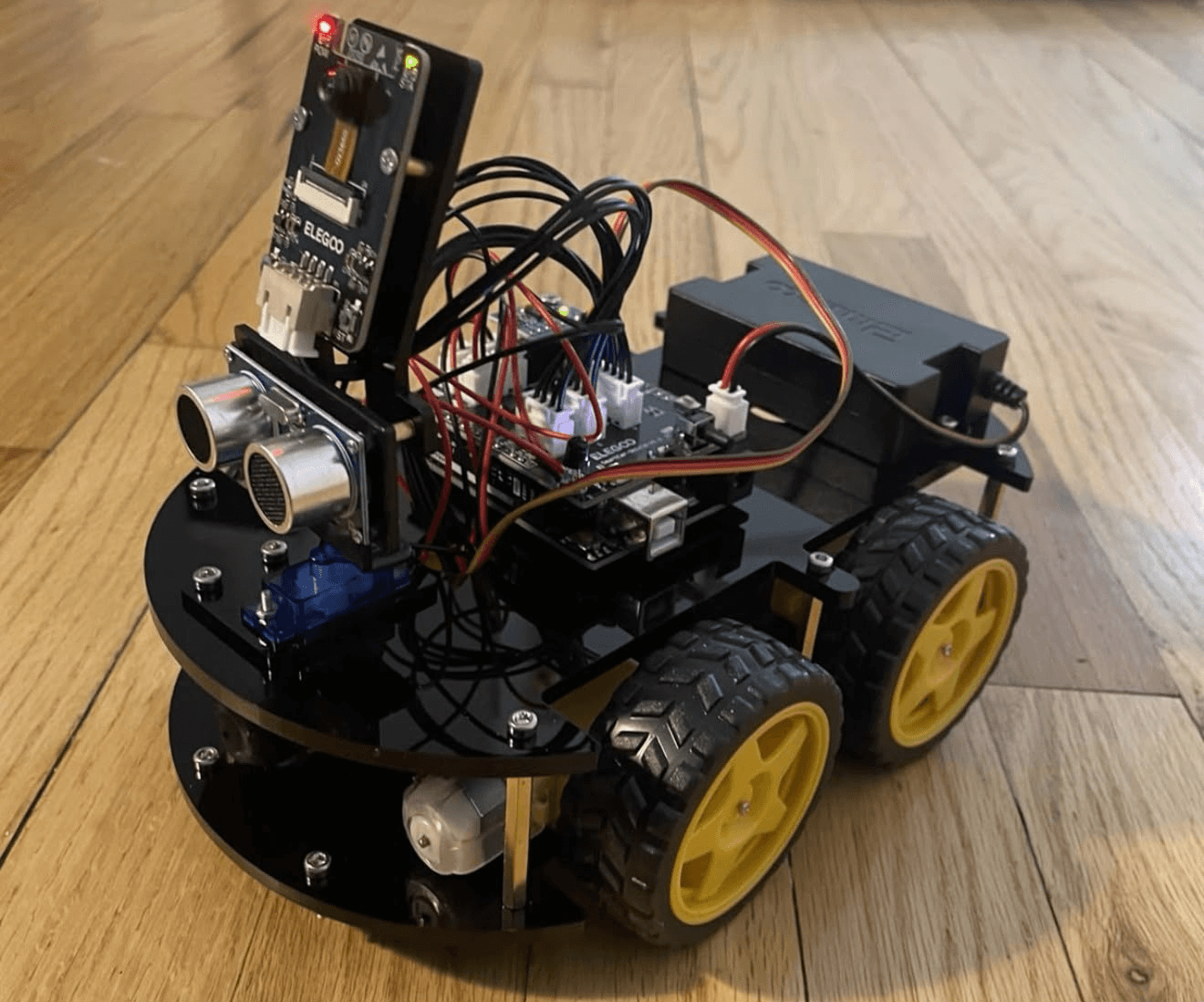
RC-X four-wheel robot platform on wood floor: black acrylic chassis, yellow wheels, ELEGOO control board, ultrasonic sensor on pan servo, camera module
03 / embedded

RC-X

Embedded · Real-time control

A small remote-control platform that became a lesson in real-time control. The loop is the product: read input, interpret, drive actuators, observe, repeat. Kit-based chassis teaching sensing, actuation, latency, and operator trust.

The loop is the product

RC-X started as a small remote-control platform and became a lesson in real-time control. On a moving chassis, the car tells you immediately when your assumptions are wrong. Latency becomes visible. Jitter becomes motion.

Sensing

Ultrasonic distance, camera feed, and wheel feedback from the chassis.

Control loop

Read input, interpret, drive actuators, observe, repeat — fast enough to feel boring.

Comms

Radio link with the hard question: what to send now vs log later.

Actuators

DC gear motors and pan servo responding to the loop in real time.

KitELEGOO platform
4WDDrive wheels
RTReal-time loop

Why this platform exists

Small platforms compress complexity. RC-X is not a full autonomous vehicle, but it contains the same families of problems: sensing, actuation, latency, safety, feedback, and operator trust. The scale is smaller. The lessons are not.

What hides on a laptop
Abstraction layersHidden latencyInvisible jitterSilent failuresTiming bugsUnreproducible state
What a moving chassis reveals
RC-X
Bare metal as teacherA lower-level firmware path means fewer invisible decisions between input and output. When the car behaves badly, there are fewer places for the bug to hide.
Diagnostics vs controlThe more you send, the more you crowd the control channel. Real-time systems are about deciding which information is allowed to interrupt the present.
Trust through predictabilityThe loop has to feel boring — predictable enough that the vehicle disappears under the operator's intent. That is the difference between a device and a platform.

How the platform came together

Kit-based ELEGOO chassis with camera module, ultrasonic sensor, pan servo, and DC gear motors. The firmware path stayed low-level to keep the platform legible.

ChassisELEGOO 4WD kit with black acrylic frame and yellow drive wheels.
SensingHC-SR04-style ultrasonic on pan servo, plus camera module.
ActuationDC gear motors driven through control board, battery pack power.
FirmwareBare-metal control loop owning timing, peripherals, and failure states.
01

Assemble the kit

ELEGOO Smart Robot Car platform: chassis, motors, ultrasonic, camera, control board, battery pack, wiring.

02

Build the control loop

Read input, interpret intent, drive actuators, observe result. Make it fast enough to disappear.

03

Learn the trade-offs

Radio bandwidth is finite. Decide what the operator needs now versus what can be logged later.

04

Toward onboard perception

Next version: move more intelligence onto the platform — richer diagnostics, eventually closed-loop autonomy.

PlatformEmbeddedBaseELEGOO kitFocusReal-time controlStageLearning platform

Highlights

  • Kit-based ELEGOO Smart Robot Car chassis
  • Four-wheel drive with DC gear motors
  • Ultrasonic distance sensor on pan servo
  • Camera module for visual feedback
  • Bare-metal firmware path for platform legibility
  • Control loop designed to feel boring — predictable enough that the vehicle disappears under operator intent
  • Radio trade-off discipline: what to send now vs log later

Tech Stack

  • ELEGOO Smart Robot Car kit
  • HC-SR04-style ultrasonic sensor
  • Pan servo for sensor aiming
  • Camera module
  • DC gear motors
  • Control board + shield
  • Battery pack
  • Bare-metal firmware

Getting Started

Prerequisites

  • ELEGOO Smart Robot Car kit or similar 4WD chassis
  • Firmware development environment
  • Radio link for remote control

Run the app

  1. Assemble the kit platform: chassis, motors, sensors, wiring.
  2. Build the control loop: read input, interpret, drive actuators, observe.
  3. Tune until the loop feels boring — predictable enough to disappear.
  4. See the archive essay for deeper lessons: /archive/rc-x-control-lessons

Project Structure

chassis/       # Physical assembly
firmware/      # Control loop and peripheral drivers
comms/         # Radio link and diagnostics
docs/          # Hardware notes and wiring diagrams

Roadmap

  • Move toward onboard perception
  • Richer diagnostics without crowding the control channel
  • Eventually closed-loop autonomy

Trade-offs

DecisionBare-metal firmware for fewer invisible decisions between input and output
TradeoffMore glue code, but a legible platform where bugs have fewer places to hide
ConstraintRadio channel forces the question: what does the operator need now vs log later?