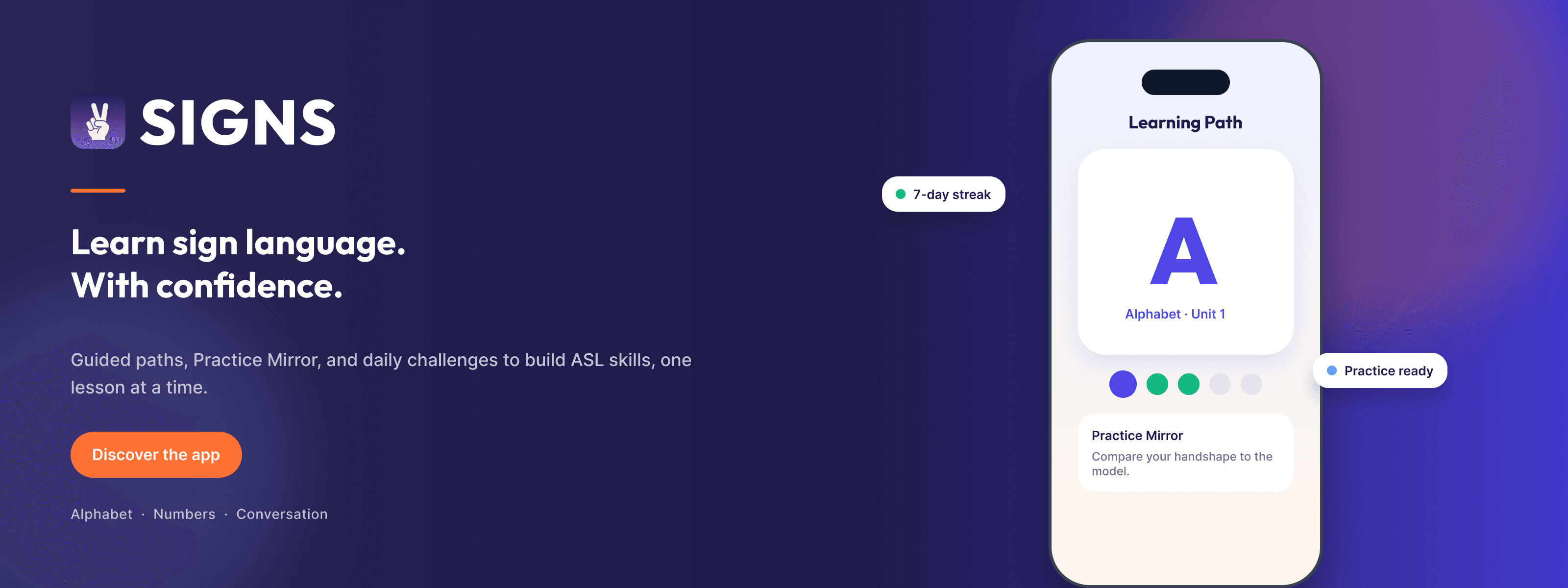
SIgns product banner: learn sign language with guided paths and Practice Mirror
01 / software

SIgns

Accessibility · Preparing Android beta

A React Native learning product co-built with Steven Readman. Visual dictionary and structured lessons for ASL learners. Now entering real-world testing and Android beta.

View on GitHub

Make sign language as easy to start as any spoken language

SIgns is a mobile learning product co-built with Steven Readman: a visual dictionary and structured lessons. We are moving from build into store submission, beta recruitment, and real feedback.

Dictionary

Search or browse signs with clear demos and descriptions.

Lessons

Progressive paths from greetings to conversation.

Practice

Recognition, matching, and recall exercises.

Progress

Tracking and streaks that keep learners returning.

2Builders
2Product pillars
βAndroid beta ahead
Why it exists

Most language products optimize for speech. Sign languages stay underserved. We are only now putting the product in front of real learners, so this page does not invent usage metrics.

What learners juggle today
YouTube clipsStatic PDFsRandom appsInconsistent demosNo progress pathSpoken-only UX
What SIgns aims to be
SIgns
Two pillars firstDictionary + lessons before expanding into features that dilute the learning loop.
Shared ownershipSteven and I co-built as a team of two. Product framing, mobile UX, and engineering moved together on one React Native codebase.
Beta before polish theaterThe next proof is testers and store feedback, not another screenshot deck.

How we are launching

Idea → build → store path → recruit testers → learn. Android beta is the current gate.

React NativeShared mobile UI for both platforms.
NavigationReact Navigation across dictionary and lessons.
StateZustand for progress, favorites, and session flow.
BackendNode.js API with PostgreSQL for learning content.
01

Define the gap

Spoken-language apps dominate; sign learners lack a clear start and a durable practice loop.

02

Ship the core loop

Dictionary and structured lessons in one RN app, built by a team of two.

03

Enter real testing

Prepare Android beta, recruit learners, and capture what breaks in practice.

04

Iterate from feedback

Replace assumptions with tester problems, then change the product.

Screens · Product
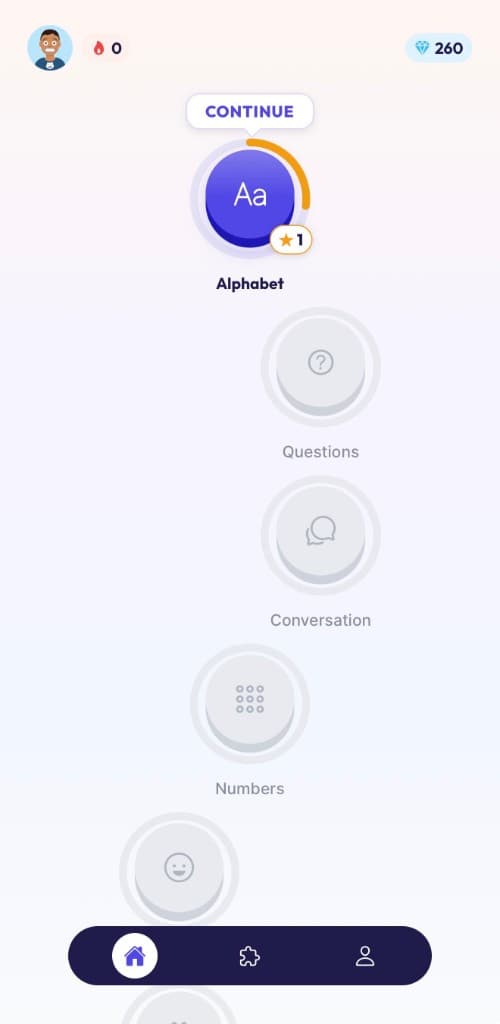
SIgns home learning path
01Home

A clear learning path with streak, gems, and the next lesson to continue.

SIgns practice drills screen
02Practice

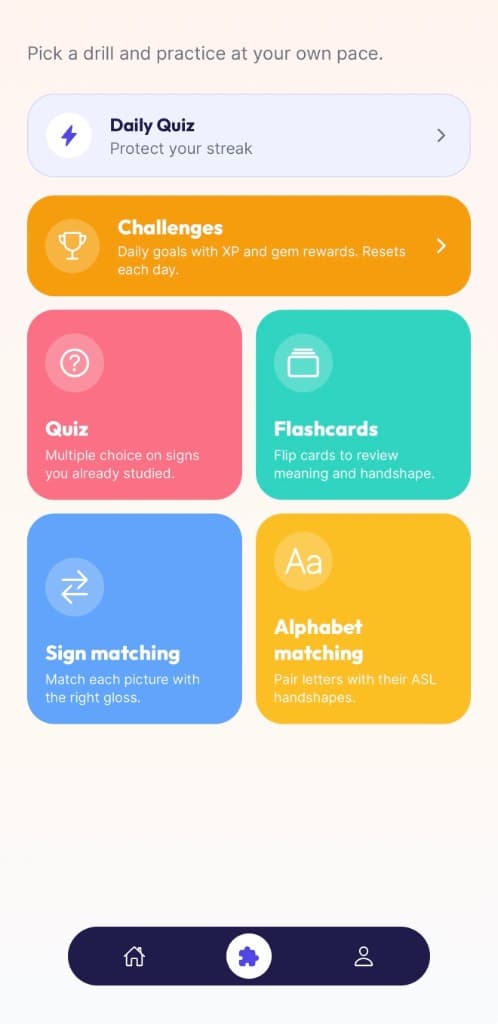
Daily quiz, challenges, flashcards, and matching drills at your own pace.

SIgns profile and progress screen
03Profile

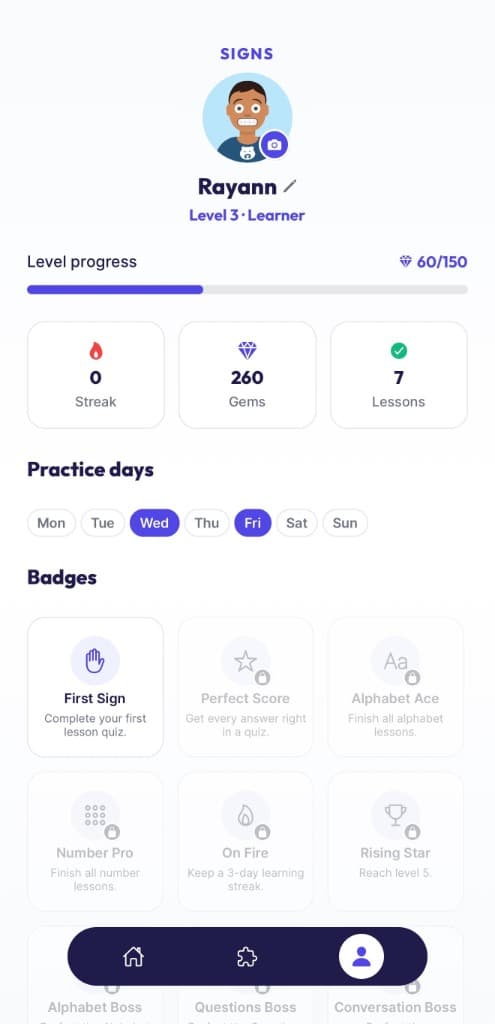
Level progress, practice days, badges, and motivation loops in one place.

SIgns app icon
04Brand

Built by a two-person team around dictionary learning and structured lessons.

PlatformReact NativeTeam2 buildersFocusAccessibilityStageAndroid beta ahead

Highlights

  • Visual dictionary with search, categories, and favorites
  • Structured lesson paths by difficulty
  • Recognition, matching, and recall exercises
  • Progress tracking and completion streaks
  • Single React Native codebase for iOS and Android
  • Co-built with Steven Readman; shared product and engineering ownership

Tech Stack

  • React Native
  • React Navigation
  • Zustand
  • Node.js
  • PostgreSQL

Getting Started

Prerequisites

  • Node.js
  • npm or yarn
  • iOS Simulator, Android emulator, or a physical device

Run the app

  1. Clone the SIgns repository (screadman/SIgns).
  2. Open the asl-app workspace and install dependencies.
  3. Start the React Native app on iOS or Android.
  4. Explore the dictionary and lesson flows end to end.

Project Structure

asl-app/
  assets/asl/     # Sign media by category
  assets/onboarding/
  # React Native screens, navigation, and state

Roadmap

  • Finish Android beta packaging and tester recruitment
  • Replace assumptions with observed learner problems
  • Iterate lesson and practice loops from real feedback

Trade-offs

DecisionDictionary + lessons as the two product pillars
TradeoffOne RN codebase so a two-person team can reach both platforms
ConstraintKeep learning accessible without becoming a spoken-language clone